The past year has flown by! My initial goal was to update this blog once a month and that has not been happening. So here I am with my second update/post, a year later. Thank you again to all who have reached out to me regarding my brain tumor and my overall health. I value everyone’s messages, gestures, food, flowers, cards, and I am so grateful for the overwhelming support!
My initial blog post was about understanding the type of brain tumor that I had and realizing the importance of being an advocate for myself by asking endless questions to subject matter experts.
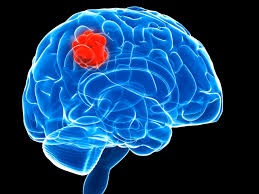
I wanted to remind you of some of the images from the 2nd MRI that I had on March 1, 2023. The first photo shows the 3cm brain tumor behind my left eye. The second photo shows the vasogenic edema (swelling in my brain on the left side). My first MRI was on December 10, 2022. There wasn’t a significant change in the size of the tumor within those 3 months. My neurologist noted that there was stable moderate to large amount of vasogenic edema (swelling) in the left temporal lobe. Due to my brain tumor and the swelling in my brain, there was a 4mm midline shift of my brain to the right side.


Although there wasn’t a significant change in the size of the tumor and swelling. I began to have more severe headaches, spasms/twitching in my face, episodes of feeling lightheaded, and feeling of being off balanced every day.
Random thought…for the past couple of years when I would clean my ears, I would always notice a significant amount of ear wax in my right ear opposed to the left. I would hardly ever see any ear wax in my left ear, but I would have a large amount in my right ear. I’m going to email my doctor about this, but maybe it had something to do with the tumor and swelling pressing my brain to the right side of my head.
I cannot speak highly enough about my neurologist! I again thank my husband for taking me to the Emergency Room. This prompted a referral to my neurologist. My neurologist did an amazing job at listening to my questions, concerns, and helping me understand what may be happening within my brain due to the swelling and tumor.
I was really concerned about the anti-seizure medication (Keppra) and the known side effects, but I trusted my neurologist and continued to slowly increase the dosage. As I continued to communicate with my neurologist, he shared that he would be presenting my case within Kaiser’s multidisciplinary morning round (with the participation of neuroradiology, neurology, and neurosurgery). My brain MRI imaging and clinical history would be reviewed and discussed. I felt happy knowing that I was being discussed and hopeful for a successful treatment plan.
My neurologist shared that they were seeing cerebral edema adjacent to the brain tumor, which very likely was causing the brain nerve cells to be irritated, it was recommended for me to begin to take Dexamethasone, an oral steroid medication to reduce the tissue edema (swelling) and inflammation. This treatment would not affect my other treatment: anti-seizure medication or potential surgical treatment.
I was extremely overwhelmed, yet appreciative of all of the information that I was receiving. My goal was to have my brain edema dissolve and my brain tumor surgically removed successfully.
I spoke with a neurosurgeon, concerning my meningioma & edema in the beginning of March 2023. I decided to reach out to my primary care physician and ask for a referral to have a 2nd opinion appointment with another neurosurgeon. On Tuesday, March 28, 2023, I had 2 medical appointments: Ambulatory EEG & my 2nd opinion appointment with another neurosurgeon. I wanted to hear another neurosurgeon’s perspective regarding my medical condition.
Ambulatory EEG
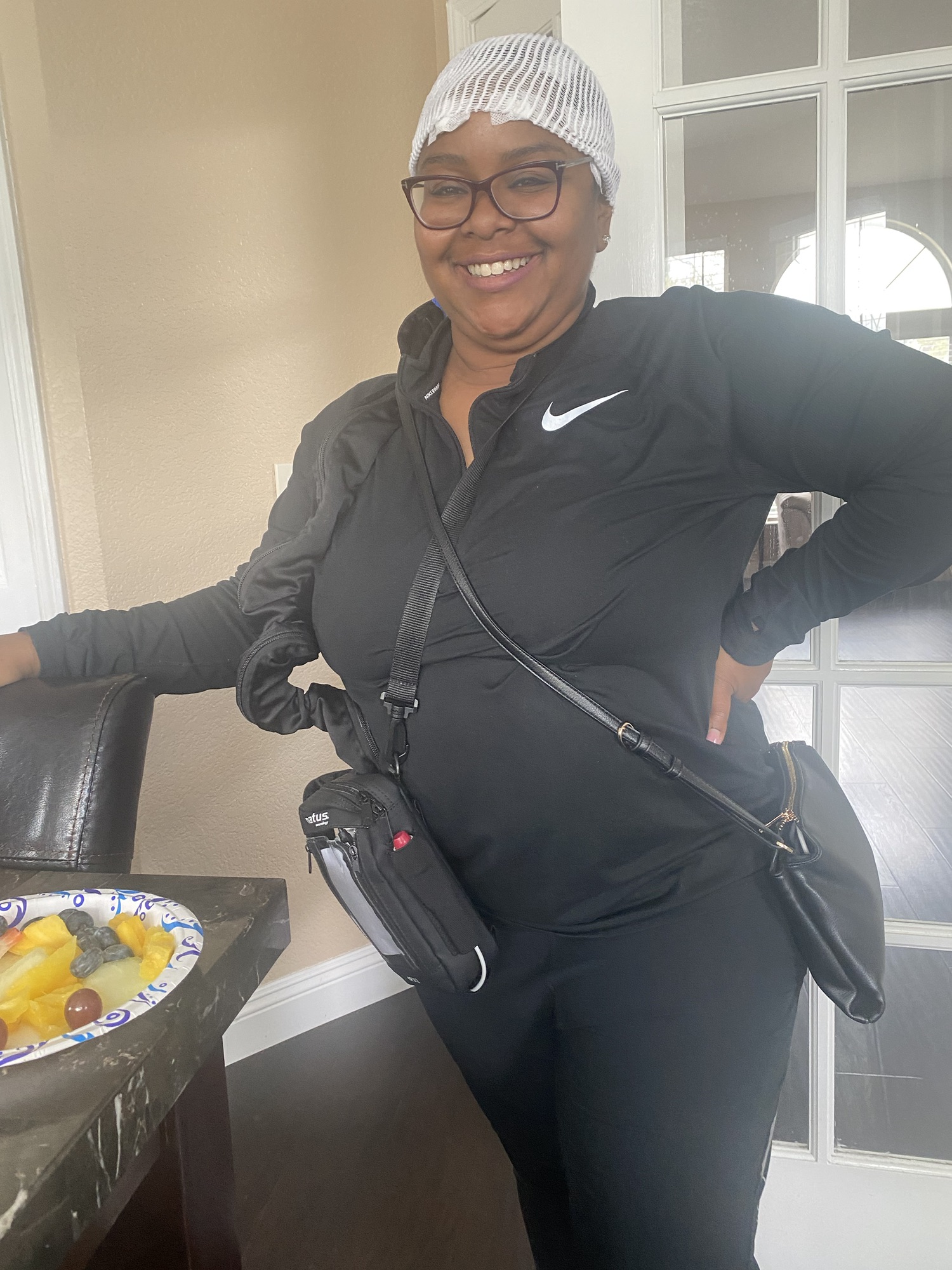
My neurologist recommended that I have an ambulatory EEG done. On the morning of March 28, 2023, I went to the EEG lab and had 28 electrodes (wires) attached to a portable EEG monitor. The monitor was placed inside of a fanny pack/shoulder bag. The machine records brain wave patterns while you do your normal activities. I had to wear this for 72 hours (3 days).
The staff adhered the wires to my scalp with a sticky adhesive called collodion. The technologist put a cap on top of the sensors to help them remain in place. It wasn’t painful, but it was a little uncomfortable having to carry the monitor around everywhere, sleep with it, and do daily tasks with wires attached to my head. When I dropped my kids off at school or went to the grocery store, I noticed people staring with looks of concern and confusion. I would just smile back or explain what was going on. 🙂
There was a button on the monitor that I was supposed to press if I felt like something was off (dizziness, headaches, twitching, etc). I would press this button and write down what I felt and the time while wearing the device. Three days later, I returned to the lab and the technologist removed the electrodes with acetone (like nail polish removal) or a similar solution was used to remove the glue at the end of the test.

A few days later, my neurologist shared that he reviewed my EEG, a few clinical events were reported and recorded. Such clinical events were associated with focal slowing and focal epileptiform discharges seen in the left temporal regions. Six focal onset seizures were also recorded, seizures were noted arising from the left temporal regions and associated with the push-button events. Interictally (between epileptic seizures), focal slowing, and focal epileptiform discharges were frequently seen. In summary, my reported clinical symptoms are associated with the focal EEG abnormality and seizures were also recorded. The EEG findings were very likely due to the known tumor.
Although I was shocked (and EXTREMELY OVERWHELMED) to have a confirmation that I was actually having seizures, I finally felt heard. I was thankful that my neurologist had me do numerous tests and confirmed that what I was feeling was valid and now we can work on a plan to move forward.
Due to all of the changes, I was referred to classes on how to manage my stress, continued to meet with my therapist weekly, I began eating healthier, reading more, and walked/exercised daily.
Neurosurgeon – 2nd Opinion Appointment
On March 28, 2023, I had a 2nd opinion phone appointment with another neurosurgeon. The conversation went really well. I discussed the option of having the brain tumor removed given my symptoms and severe surrounding vasogenic edema. The surgeon explained the risks, benefits, and alternatives. Non-surgical options were also discussed. Risks include but not limited to bleeding, infection, need for re operation, worsening neurologic status after surgery, delayed infection requiring removal of bone, and long-term antibiotics, development of intra parenchymal (bleed that occurs in the brain) or extra axial fluid/blood collections requiring re operation as well as stroke, heart attack, coma, or death.
Whew…it was a lot to take in, but I wanted to have the tumor removed. The neurosurgeon let me know that he would send over a request for the scheduling team to contact me to coordinate the date of the surgery. I was advised that scheduling will be based on the surgeon’s availability and there may be a delay in getting scheduled for an elective surgery. At this time, I wasn’t sure how soon I would have surgery to remove the tumor, but I was thankful that I was moving forward in the process.
Neuropsychology Test
My neurologist referred me to have a neuropsychology test on April 13, 2023. Neuropsychological testing measures how well your brain works. It tests for a range of mental functions, like reading, language use, attention, learning, processing speed, reasoning, remembering and problem-solving, as well as mood and behavior. Specially trained neuropsychologists look at the results to better understand the relationship between your brain health and behavior, mood, and thinking (cognition). The test took over 4 hours to complete. I felt pretty confident answering some of the questions, some were more challenging than others, but I was eager to see what my results indicated.
As time went on, I continued to have several medical appointments, take my anti-seizure medication, Keppra, as well as dexamethasone (steroid to reduce the swelling in my brain). I had a hard time getting sufficient sleep and I continued to have headaches. Although I was exercising daily, I was quickly gaining weight due to the steroid medication.
Emergency Room
June 29, 2023. I don’t remember too much about that day. I know I woke up, took our children to school, came back home, and as soon as I walked in the door…I felt exhausted, and I laid down on the rug in our living room. When I woke up, I was in the emergency room. My husband and emergency room physician were there when I woke up and let me know that I had a tonic-clonic seizure. My parents and in laws immediately came to the hospital as soon as my husband called them. I was surrounded by love and endless prayers from family and friends.
Early that morning, my husband went to work and called me to check in. When I answered the phone, I wasn’t speaking clearly, I wasn’t making sense, and I began screaming. My husband immediately called 911, my parents, and my sister-in-law. EMS came to our home and took me to the hospital! It is so unbelievably scary for me to hear the details from my husband, EMS, and my sister-in-law who heard/saw me experiencing the seizure. I don’t recall anything that happened after I laid down.
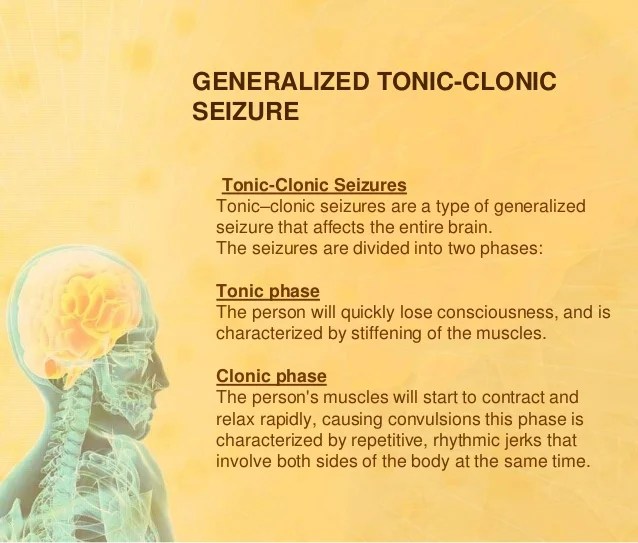
A tonic-clonic seizure, previously known as a grand mal seizure, causes a loss of consciousness and violent muscle contractions. It’s the type of seizure most people picture when they think about seizures.
During a seizure, there’s a burst of electrical activity in the brain that causes changes in behavior and movements. Seizures can be focal, meaning the burst of electrical activity happens in one area of the brain. Or seizures can be generalized, in which they result in electrical activity in all areas of the brain. Tonic-clonic seizures may begin as focal seizures in a small area of the brain and spread to become generalized seizures that involve the whole brain.
Focal and generalized seizures have different symptoms. People who have generalized seizures usually lose consciousness. In tonic-clonic seizures, the muscles become stiff, causing the person to fall. Then the muscles alternately flex and relax.
The emergency room physician spoke with my neurologist, and he recommended that I increase the Keppra dose to 4 tablets twice a day. That is a total of 2000 mg daily (from the current dose of 1500mg daily). I don’t know what triggered the tonic clonic seizure. I pray that I never have to experience anything like that again. I’m so thankful that I have a supportive husband, parents, in-laws, family, friends, and community who have continued to encourage me, send me love, and endless prayers.
Thankfully no one was seriously injured including myself. One major blessing is that this event helped expedite my surgery date. I was contacted about a week after my tonic-clonic seizure and my surgery date was scheduled for August 8, 2023!
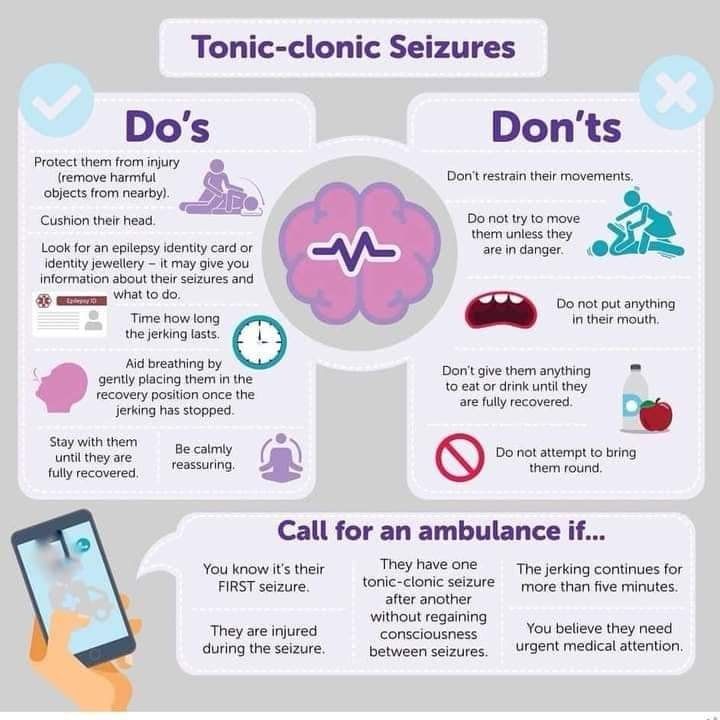
Please check out the Do’s and Don’t’s when someone is experiencing a seizure.
Thank you again for reading! I have so much more to share! The next blog will be about my craniotomy (brain surgery)! As a reminder, I want everyone to know how extremely blessed I am. I wouldn’t be where I am today without my husband, parents, family, friends, and of course, the amazing medical physicians and staff.
I am happy, healthy, thriving, and loved!


 Arianna’s Meningioma Journey
Leave a reply to Kara Haynes Cancel reply